
We are delighted to welcome you to our platform, dedicated to providing in-depth guidance and resources for navigating the complexities of Property purchase process in Spain.
We are condensing here the result of more than 20 years experience in property transactions, resuming and identifying transaction risks which are common in the Spanish property market.
With our expert resources you can confidently manage your property acquisition including all the proper Due Diligence points in order to protect your position and your investment.
We are here to simplify the process and help you make informed decisions every step of the way.
Legal and technical literature about how to detect the real essential points when buying a property in a new building project or urbanisation in Spain.
More than 20 years experience condensed in this section.
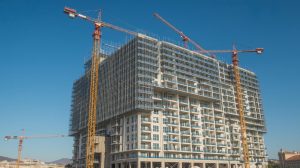
Sales without obtaining the final building permit.
It is very common for certain types of builders or developers to offer apartments for sale without having obtained the necessary building permit. This carries the risk that the project submitted to the city council may not be approved, or that it may be subject to modifications, which would mean that the property offered for sale could later undergo unexpected changes, resulting in a property different from the one initially considered.
During the construction process and once the license has been obtained, changes in the quality and finishes of the materials may be made.
It is very common to find cases where construction contracts signed with the developer do not specifically detail the finishes and the quality of materials and construction included in the price. Sometimes, the contracts include very general and superfluous lists of qualities, lacking sufficient detail. This gives the builder broad discretion in choosing materials and qualities that are not always selected with the buyer’s interests in mind , opening the door to selecting those that best suit the builder’s interests and profit.
It is very common for construction contracts drawn up by construction companies to grant the builder broad powers to make changes to the design, the actual size of the property, or the layout of the rooms. This often involves changes that, had the buyer been aware of them, would have influenced their decision to purchase. Knowing about these changes in advance might have led them to choose different terms or simply not to make the purchase at all.
Similarly, it is very common to find construction contracts that give the construction company leeway to modify prices under certain conditions (such as Force Majeure, war scenarios, etc. ) that are very general and lack detail , and which practically leave it up to the developer/builder to decide when and how to modify prices as they please.
Contracts offered by developers typically include strict clauses to protect their position against potential breaches by the buyer.
However, in many cases, these contracts do not include buyer protection clauses that proportionately penalize the builder’s breach.
It is very common to find contracts in which buyers are forced to continue with the purchase of the property, even if they have suffered economic changes in their personal situation that prevent them from continuing with the contract, or to lose all or most of the amounts paid as a penalty.
In this way, the builder has the assurance that the buyer will continue the purchase until the completion of the project.
However, the same is not usually true for the builder/developer.
Contracts that provide the buyer with tools or mechanisms to force the builder to complete the contract are uncommon.
Sometimes, however, we find contracts in which the builder is obligated to return the amounts paid by the buyers, even with interest, if they are unable to continue the project.
However, these types of clauses do not adequately protect the buyer.
The reason for this is that it leaves open the possibility for the builder to literally “withdraw” from the contract signed with the buyer at any time they deem appropriate.
For example, in the event of a rise in property prices in the area.
Thus, in the event of a rise in housing prices on the market, the builder is empowered to pressure the buyers to increase the price of the property if they wish to continue with the contract, or to terminate it, forcing the buyers to end it, so leaving the chance to the builder to sell it to third parties at a better price.
These types of situations leave those buyers who trusted the builder, even in the very early stages of the construction project, completely defenseless, and who find themselves unfairly excluded from it.
It is very common to find situations in which the builder does not offer a bank guarantee or surety insurance to the buyer to secure the amounts paid on account of the price.
The bank guarantee has been established as an obligation in Spain since regulations dating back to around 1960, and was established as an essential condition from 2011 onwards, when the possibility of offering surety insurance to protect the amounts paid by the buyer as an alternative to the bank guarantee was also included.
Therefore, it is an unavoidable obligation in the Spanish market for builders/developers to offer buyers a bank guarantee or surety insurance in any of the Spanish financial entities.
The reason for requiring the builder to provide a bank guarantee is to ensure that the amounts paid by the buyer do not go directly into the hands of the builder, and that the builder uses them to finance and carry out the construction project, as this would make it difficult to return the funds if the project does not proceed for any reason.
In other words, the Spanish system requires developers to finance their projects either with their own funds or with external funds (usually from banks), but without using the funds received from buyers, who must have the assurance of recovering the amounts paid in the event of any unforeseen event that causes the project to be halted or abandoned by the developer.
Therefore, if the builder is unable to complete the work, whether due to financial or economic reasons, the buyer can go directly to the bank and recover the amounts paid, thus safeguarding their investment and separating it from the risks of the project’s execution, which the builder must logically and exclusively assume.
The process for developers to obtain a bank guarantee in Spain typically involves strict financial and credit checks by the bank. Specifically, the Spanish bank conducts an economic, legal, and financial analysis of the developer before issuing the guarantee.
Therefore, the Spanish bank does not grant the possibility of such a guarantee to those developers or construction companies that do not sufficiently demonstrate their financial and credit capacity, as well as their solvency and responsibility.
These cases are usually common when:
Therefore, according to Spanish law, a development company cannot undertake a construction project without the timely presentation of bank guarantees to the buyer.
However, we sometimes encounter real estate developments that are offered to buyers without bank guarantees.
When the developers were asked why they did not comply with the law and provide the required guarantees, we received answers such as:
None of these responses are legally acceptable.
Not even depositing such amounts into a third party’s account, even if that third party is a notary.
If the buyer accepts this type of proposal, they should know:
It is common for the developer/builder to offer to consider as habitable space that are not actually habitable.
We often come across contracts that include plans which show spaces as part of the house, but which are not actually habitable, such as attics, spaces under stairs, basements, under-floors, etc.
Again, it is very common for developers and construction companies to present building surfaces of the property as part of it, when in reality these are surfaces that belong to the community of owners, of which the buyer will only have the use, but not the ownership.
For example, structures on terraces, gardens, or porches that appear to be built on private property are actually communal spaces belonging to the co-owners/community of owners. What is actually being sold is not ownership of these elements or spaces, but rather their “use.”
In other words, since these spaces are located in communal areas, the owners of the properties to which they belong do not hold ownership, but rather the right to use them, as the actual ownership belongs to the propertyowners’ association or residents’ association. This implies potential limitations on the use and enjoyment by buyers of such important spaces as balconies, terraces, gardens, porches, swimming pools, etc.
It’s also quite common to find listings for properties under different ownership structures. For example, you might find listings for properties owned through cooperatives or joint ownership agreements.
On other occasions, we find that the properties offered are not “dwellings,” but “tourist houses” or “tourist apartments” for non-temporary use and not habitable, or timeshare apartments, which fall outside the commonly acceptable forms in the market, and which imply a series of legal, juridical, and fiscal consequences that are not always explained correctly to buyers when entering the initial purchase and sale processes, and which significantly affect the investment and its legal use and enjoyment.
It is very common, especially in areas of recent urban development, where the urbanization works have not been completed, or their costs have not been paid by the developer.
We are talking about roads, highways, paving, pedestrian areas, gas, water, electricity facilities and infrastructure and, most importantly, sanitation and sewage systems.
This poses a risk to property buyers under these conditions, as they are left at the mercy of the developers to:
Constructed buildings throughout Spain require, upon completion, the issuance of an occupancy license or certificate of habitability.
This is an essential requirement that is applied by law throughout the Spanish territory.
The occupancy license, or certificate of habitability, is granted by the local administration once the work has been completed and finished, and once the developer proves that:
The process of obtaining the occupancy license ends with an inspection carried out by local authorities, once the work is completed, to verify that the construction has been finished in accordance with the construction project that was submitted at the time and for which the corresponding license was obtained.
In other words, the construction complies with:
At that point, once these aspects have been verified, the City Council grants the occupancy license or certificate of habitability, which entails the following effects:
Obtaining an occupancy permit or certificate of habitability means that the construction work has been completed. Therefore, once the architect in charge of the project confirms that it has been successfully completed, the process of obtaining the occupancy permit/certificate of habitability from the City Council begins.
According to Spanish regulations, which generally apply to the entire Spanish territory, the developer cannot force the buyer to complete the notarial deed of sale of the properties, with the consequent final payment of the price, without providing the corresponding occupancy license or certificate of habitability to the buyer.
That said, it is very common to find developer contracts that leave open the possibility for the developer to force buyers to pay the full price and sign the notarial deeds of sale, without having provided the occupancy license or certificate of habitability required by the regulations.
The arguments we generally encounter from the promoters are:
This forces buyers to make final payments and complete the purchase without having obtained the necessary guarantees for obtaining such documents, which, as we say, are essential to confirm that the Spanish administration is in agreement with the work, and what is even more serious: buyers cannot legally connect to the water, electricity, etc. supplies without obtaining such a document.
By law, Spanish water and electricity companies require the presentation of an occupancy license or certificate of habitability to contract for services in the owner’s name. Without this document, the utility companies can refuse to supply or service the property.
Furthermore, completing the purchase of a property without having obtained the occupancy permit or certificate of habitability transfers to the buyer the risks caused by the building’s non-compliance with regulations. In other words, as we mentioned, it is the responsibility of the authorities to verify that the construction has been carried out in accordance with regulations, and to do so, they must inspect the property as part of the occupancy permit issuance process.
Let’s assume the buyer has already paid the builder the full price and is now the owner, even though the relevant authorities haven’t yet carried out the required inspection of the construction. In these cases, the buyer, now the owner, is completely defenseless against the possibility that the authorities will detect serious defects in the building’s compliance with regulations, which could lead to penalties, requirements to remove or modify the existing structure, or even demolition orders.
Construction companies often create special purpose vehicles ( SPVs ) specifically for a project, primarily to limit the parent company’s financial and legal liability in the event of defaults, bankruptcies, or litigation arising from the project. This allows them to isolate risks, manage financing independently, and, in some cases, avoid using the parent company’s equity to cover debts if the project fails.
In summary, it is a strategy to manage the high instability and insolvency risks inherent in the sector, sometimes abusing the figure to avoid direct economic responsibilities.
Construction projects where it is involved the acquisition of a plot with building rights, with special attention to limitations and affections which implies reduction or losses of contraction rights, construction contracts, and fault of essential legal requirements and documents.
In addition of the points to check as per general buildings and apartments, pay attention to the following ones:
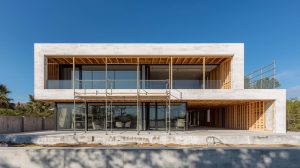
It is very common, especially in old urbanizations, which were developed in a deficient urban planning manner, or built according to previous regulations that have now been repealed, to find plots or villas in which , in order to carry out or obtain a building permit, it is necessary to undertake the urban planning works that affect said plot and that are not finished.
In other words, it involves carrying out the urbanization works or urbanization costs for the exterior of the plot that have not been completed or, if completed, were done poorly. Therefore, it is common to find cases where it is necessary to construct access roads and paths, pedestrian areas, connect to the public sewage system, and connect or improve existing water, electricity, and other infrastructure on the plot.
In these types of situations , local councils or entities usually require owners who are going to undertake new buildings, construction extensions, or licenses to reform or renovate, to pay the urbanization costs of said plots that were not paid at the time by the builder, in order to authorize the construction of a house on them.
Urbanization costs are usually the most expensive part of a construction process, and can lead to serious economic problems for the owner or buyer who has purchased a plot without knowing about them, or who has bought a villa with the purpose of renovating it.
It is very common, especially in older urbanizations, to find plots or land pending the execution of the transfers to the administration of adjacent parts of such plots that, by law, are required to widen roads , or any other type of public easements.
These are complicated situations because we find that the plot is affected by an expansion of the roads that give access to it, or to respecting the distance with a public area (riverbeds, or dry riverbeds, or Coasts), or even the neighbor which, in addition to forcing the owner to assume the urbanization costs of expanding said road, ends in a burdensome result for the surface of the plot which is its reduction.
And what happens when the area of a plot is reduced? :
The building rights on it are reduced or cancelled.
Therefore , in addition to the economic costs associated with the potential unspent development costs of the plot, this represents a significant limitation and a very high risk to the building rights and conditions available for the plot. This is because these building rights are usually contingent on a certain plot size, according to the following formula:
Smaller plot area
=
(Less building rights) or (Loss of building rights)
For example.
And now let’s imagine that this plot of land, according to local regulations, must cede a certain number of meters for the construction or expansion of a road.
And that the transfer of the plot to the road means “giving” the public administration 300 m2 of the plot.
Therefore, the resulting plot would be 1,700 m2. That is, less than the 2,000 m2 required to have building rights, making the construction of a house on it unfeasible.
Conclusion:
Imagine the risk and economic damage that comes with not being informed of this essential aspect for the buyer.
What are “urban planning restrictions”? : Those conditions that the administration determines that affect the building capacity or use of real estate properties in Spain.
Therefore, we find plots or properties affected by coastlines, ravines, green areas, public areas, etc. In other cases, we find that these plots or villas are affected by various urban planning aspects such as dry riverbeds, river channels, etc. In these cases, as in the previous case, these impacts mean limitations when building, which can significantly affect the surface area of the plot, making it unfeasible, or, without affecting the surface area, imply limitations when locating the exact point of construction, making it unfeasible or reducing its potential.
Setbacks and road boundaries with other neighbors. On other occasions, we find that existing or planned construction does not comply with the minimum distances required by regulations, both in terms of separation from neighbors and roadways. Consequently, we find buildings constructed without respecting these distances, thus rendering them illegal.
It is very common to find situations in which the builder does not offer a bank guarantee or surety insurance to the buyer to secure the amounts paid on account of the price.
The bank guarantee has been established as an obligation in Spain since regulations dating back to around 1960, and was established as an essential condition from 2011 onwards, when the possibility of offering surety insurance to protect the amounts paid by the buyer as an alternative to the bank guarantee was also included.
Therefore, it is an unavoidable obligation in the Spanish market for builders/developers to offer buyers a bank guarantee or surety insurance in any of the Spanish financial entities.
The reason for requiring the builder to provide a bank guarantee is to ensure that the amounts paid by the buyer do not go directly into the hands of the builder, and that the builder uses them to finance and carry out the construction project, as this would make it difficult to return the funds if the project does not proceed for any reason.
In other words, the Spanish system requires developers to finance their projects either with their own funds or with external funds (usually from banks), but without using the funds received from buyers, who must have the assurance of recovering the amounts paid in the event of any unforeseen event that causes the project to be halted or abandoned by the developer.
Therefore, if the builder is unable to complete the work, whether due to financial or economic reasons, the buyer can go directly to the bank and recover the amounts paid, thus safeguarding their investment and separating it from the risks of the project’s execution, which the builder must logically and exclusively assume.
The process for developers to obtain a bank guarantee in Spain typically involves strict financial and credit checks by the bank. Specifically, the Spanish bank conducts an economic, legal, and financial analysis of the developer before issuing the guarantee.
Therefore, the Spanish bank does not grant the possibility of such a guarantee to those developers or construction companies that do not sufficiently demonstrate their financial and credit capacity, as well as their solvency and responsibility.
These cases are usually common when:
Therefore, according to Spanish law, a development company cannot undertake a construction project without the timely presentation of bank guarantees to the buyer.
However, we sometimes encounter real estate developments that are offered to buyers without bank guarantees.
When the developers were asked why they did not comply with the law and provide the required guarantees, we received answers such as:
None of these responses are legally acceptable.
Not even depositing such amounts into a third party’s account, even if that third party is a notary.
If the buyer accepts this type of proposal, they should know:
It is also very common to offer buyers the inclusion of built areas that are not actually habitable according to regulations.
We are talking about spaces that are presented as habitable areas of the house and that are actually spaces considered as “non-habitable” by the regulations such as basements, terraces, barbecues, porches, etc.
This type of construction and modification can cause problems for the owner later on, such as:
It should be noted that in Spain only ONE SINGLE-FAMILY PROPERTY is allowed per buildable plot.
A “single-family” dwelling is understood to be one in which “a family” lives. That is, it has sufficient elements and infrastructure for a single family.
This implies that theoretically there can only be one dwelling per plot or building land.
In reality, however, we encounter situations in which:
For this purpose, it is common to find:
And what’s worse, we may find uninhabitable parts of the house or annexes that are used as independent dwellings or as guest houses, such as:
This is completely prohibited by the regulations, making it undesirable for sellers to routinely claim that these types of constructions have been completed, when in reality it is a clear concealment of current building and regulatory standards.
IN SPAIN YOU CANNOT HAVE GUEST HOUSE!
You generally cannot have a guest house on your detached property because municipal planning regulations limit the plot to a single main residence .
Converting an annex into a separate dwelling is considered illegal if it violates zoning regulations, the occupancy permit, or activity regulations, and can result in penalties.
Local councils regulate land use and stipulate that each single-family plot must have only one main dwelling. Adding a full kitchen and bathroom in an annex to make it independent violates the land classification.
The consequences of this type of conditioning are, in addition to fines or penalties from the administration, the SAFETY OF THE OCCUPANTS.
Since these rooms are not permitted by the administration for use as housing, they do not have sufficient security guarantees in case of:
It’s not just an urban planning issue; it’s a vital security problem.
Constructed buildings throughout Spain require, upon completion, the issuance of an occupancy license or certificate of habitability.
This is an essential requirement that is applied by law throughout the Spanish territory.
The occupancy license, or certificate of habitability, is granted by the local administration once the work has been completed and finished, and once the developer proves that:
The process of obtaining the occupancy license ends with an inspection carried out by local authorities, once the work is completed, to verify that the construction has been finished in accordance with the construction project that was submitted at the time and for which the corresponding license was obtained.
In other words, the construction complies with:
At that point, once these aspects have been verified, the City Council grants the occupancy license or certificate of habitability, which entails the following effects:
Obtaining an occupancy permit or certificate of habitability means that the construction work has been completed. Therefore, once the architect in charge of the project confirms that it has been successfully completed, the process of obtaining the occupancy permit/certificate of habitability from the City Council begins.
According to Spanish regulations, which generally apply to the entire Spanish territory, the developer cannot force the buyer to complete the notarial deed of sale of the properties, with the consequent final payment of the price, without providing the corresponding occupancy license or certificate of habitability to the buyer.
That said, it is very common to find developer contracts that leave open the possibility for the developer to force buyers to pay the full price and sign the notarial deeds of sale, without having provided the occupancy license or certificate of habitability required by the regulations.
The arguments we generally encounter from the promoters are:
This forces buyers to make final payments and complete the purchase without having obtained the necessary guarantees for obtaining such documents, which, as we say, are essential to confirm that the Spanish administration is in agreement with the work, and what is even more serious: buyers cannot legally connect to the water, electricity, etc. supplies without obtaining such a document.
By law, Spanish water and electricity companies require the presentation of an occupancy license or certificate of habitability to contract for services in the owner’s name. Without this document, the utility companies can refuse to supply or service the property.
Furthermore, completing the purchase of a property without having obtained the occupancy permit or certificate of habitability transfers to the buyer the risks caused by the building’s non-compliance with regulations. In other words, as we mentioned, it is the responsibility of the authorities to verify that the construction has been carried out in accordance with regulations, and to do so, they must inspect the property as part of the occupancy permit issuance process.
Let’s assume the buyer has already paid the builder the full price and is now the owner, even though the relevant authorities haven’t yet carried out the required inspection of the construction. In these cases, the buyer, now the owner, is completely defenseless against the possibility that the authorities will detect serious defects in the building’s compliance with regulations, which could lead to penalties, requirements to remove or modify the existing structure, or even demolition orders.
It is also very common, especially in the construction of villas on individual plots, for the builder to force the buyer to adopt legal figures other than that of a mere buyer, such as the figure of the self-promoter , or the figure of depositing the amounts delivered in the absence of a bank guarantee, in different accounts, such as notaries, etc.
Let’s talk about SELF-PROMOTION IN INDIVIDUAL CONSTRUCTION PROJECTS.
By assuming the role of the Self-Promoter , the buyer becomes the promoter of the work, with all the responsibilities that this entails, including safety on the construction site, workplace accidents, non-compliance with regulations, administrative sanctions, because in reality they should fall on the builder, etc.
Sometimes we find that these types of construction solutions are not explained properly to the buyer, who is invited to sign contracts without the corresponding legal and urban planning advice, without really being aware of the importance and seriousness that the concept of developer entails.
Therefore, adopting the self-promotion model in property construction is highly risky because it involves assuming direct technical, legal, and financial responsibilities, at the same level as a builder/developer, but without being a professional dedicated to this activity, lacking the necessary legal and tax knowledge. Worse still, it also means lacking the financial capacity to handle the heavy burden of responsibility being assumed.
The self-promotion model involves high stress, complex license management, structural risk, possible workplace accidents, with even criminal liability in the event of a serious incident on the construction site, or significant cost overruns and delays, due to the lack of experience and guarantees from a specialized construction company.
The main risks are detailed here:
Example: If the self-promoter :
And this creates a serious and concrete risk ; there may be criminal liability.
It is very common to find plots or building land that have significant discrepancies between the actual surface area of the land and the area registered in the property registry or the land registry.
Sometimes, even if the disagreement is not very large, it can have significant consequences from a constructive point of view, since:
Resale of apartments in buildings in open areas.
Special attention to structural reforms, inspections, community rules and problems, and lack of essential information to the buyer.

It is very common, especially in buildings in large cities where an occupancy license is required, for this building not to have one.
It must be said that, in Spain, although all autonomous communities and regions generally require the provision of the occupancy license or Certificate of Habitability as an essential requirement for the sale of newly built properties, the same does not apply to resales.
Thus, we find regions such as Madrid, or Andalusia, the Basque Country , etc. , where an occupancy license or certificate of habitability is not required for the sale of a resale or second-hand property.
However, in other regions such as Catalonia, the Balearic Islands, the Canary Islands, the Valencian Community, and Murcia, obtaining an occupancy license or certificate of habitability is an essential requirement for selling a property.
That said, in regions that do require the owner to have a valid occupancy license or Certificate of Habitability for the sale of their property, it is very common for the seller not to have it or not to provide it.
In many cases, sellers are reluctant to request renewal for many reasons:
Or even worse:
The fact that the propertyowner provides the renewed and valid Occupancy License or Certificate of Habitability implies:
Therefore, the new owner not having an occupancy license means that:
Especially in existing buildings that are not newly created, where different reforms or modifications to the same licenses may have been carried out, there may be pending urban planning violations in the municipalities that can cause sanctions or in the worst case, orders to demolish what was built illegally.
A building becomes non-compliant with regulations when it :
It is essential to understand that “outside of regulations” (“Fuera de ordenación”) does not necessarily mean current illegality , but rather a supervening incompatibility with the current planning.
Typical scenario: change of planning
Let’s imagine the following scenario:
That building automatically becomes non-conforming , because:
The City Council cannot order its demolition simply because of the regulatory change, because the construction was legal when it was carried out.
However, its legal regime changes substantially.
Legal effects of being out of compliance
The legal framework for these buildings is usually regulated by regional urban planning legislation, but with common principles throughout Spain.
The most relevant consequences are:
a) The existence of the building is tolerated
The Administration:
But that tolerance does not imply full freedom of action.
b) Limitation of permitted works
Here’s the practical key.
In non-conforming buildings, normally the following are permitted:
The following are not allowed:
Critical problem: structural reforms
One of the biggest conflicts arises when the building:
In these cases, the City Council can:
If current regulations only allow 3 floors and the building has 7, the following may happen:
In the event of total ruin or voluntary demolition, the reconstruction must comply with the current planning regulations, i.e., only 3 floors
This has a huge impact on assets.
Difference between ruin and rehabilitation
It is very important to distinguish:
In many municipalities, if the building is declared to be in ruins:
In the example of the 7-story building, if it is demolished, only 3 stories can be built.
The owners lose 4 floors of buildable area.
Economic and legal consequences
Being out of order can imply:
In propertyowners’ association (Community of owners) , it can generate conflicts if:
A common scenario in all types of cities
In areas built decades ago, it is common to find:
The current planning does not have retroactive effect to force the demolition of what has already been legally built, but it does condition the future of the property.
Therefore, a building considered as NON-CONFORMING:
Therefore, from an urban planning and heritage perspective, it is a highly relevant situation that should always be analyzed before buying, renovating or investing.
Often we find that the real reason a seller is selling a property is due to serious financial problems within the propertyowners’ association (Community of owners).
Failure to pay or keeping up with payments hinders the proper functioning of common areas and building elements, such as elevators. This makes the buildings uninhabitable or severely limits their habitability, as the maintenance of these elements is only possible when other residents are unable to pay.
The existence of hidden or structural defects in the building, such as termites, aluminosis, etc. These types of problems can be detected by the buyer if they carry out the appropriate investigations and request information from the seller.
The presence of squatters in other parts of the building. These types of problems can be detected by the buyer if they conduct the appropriate investigations and request information from the seller.
It is very common throughout Spain for the authorities to carry out inspections of buildings that are between 40 and 60 years old, depending on the region.
In other words, old buildings are often required to undergo an inspection by administration technicians to confirm their good condition.
As a result of this inspection, conservation problems or construction defects may be detected that may lead to requirements for correction or renovation by the administration, and that generate the duty of the owners and neighbors to carry out the necessary costs and works to solve it.
In fact, we sometimes find that this is the real reason that motivates the sale by the seller, and that, if the buyer is not properly informed, as the future owner he will become responsible for the payment of said works, as well as having to endure them for the time that their execution lasts.
There are buildings that, at the time, were built in areas with a high risk of flooding.
But there are also other areas that once had a low risk of flooding but, due to climate change, are now highly dangerous due to flooding.
And this, unfortunately, does not only happen in areas far from cities, but can also happen in cities or towns with established urbanizations and infrastructure.
Resale of bungalows and apartments in urbanisations and residential areas.
Special attention to structural reforms, inspections, community rules and problems, and lack of essential information to the buyer.

It is very common, especially in buildings in large cities where an occupancy license is required, for this building not to have one.
It must be said that, in Spain, although all autonomous communities and regions generally require the provision of the occupancy license or Certificate of Habitability as an essential requirement for the sale of newly built properties, the same does not apply to resales.
Thus, we find regions such as Madrid, or Andalusia, the Basque Country , etc. , where an occupancy license or certificate of habitability is not required for the sale of a resale or second-hand property.
However, in other regions such as Catalonia, the Balearic Islands, the Canary Islands, the Valencian Community, and Murcia, obtaining an occupancy license or certificate of habitability is an essential requirement for selling a property.
That said, in regions that do require the owner to have a valid occupancy license or Certificate of Habitability for the sale of their property, it is very common for the seller not to have it or not to provide it.
In many cases, sellers are reluctant to request renewal for many reasons:
Or even worse:
The fact that the propertyowner provides the renewed and valid Occupancy License or Certificate of Habitability implies:
Therefore, the new owner not having an occupancy license means that:
Especially in existing buildings that are not newly created, where different reforms or modifications to the same licenses may have been carried out, there may be pending urban planning violations in the municipalities that can cause sanctions or in the worst case, orders to demolish what was built illegally.
It is very common for developers and construction companies in private urbanizations to present building surfaces of the property as part of it, when in reality these are surfaces that belong to the community of owners, of which the buyer will only have the use, but not the ownership.
For example, structures on terraces , gardens, or porches that appear to be built on private property are actually communal spaces belonging to the residents’ association. What is actually being sold is not ownership of these elements or spaces, but rather their “use.”
In other words, since these spaces are located in communal areas, the owners of the properties to which they belong do not hold ownership, but rather the right to use them, as the actual ownership belongs to the propertyowners’ association or residents’ association. This implies potential limitations on the use and enjoyment by buyers of such important spaces as balconies, terraces, gardens, porches, swimming pools, etc.
Therefore , we may encounter cases where:
In addition to this, a very important point in this regard is that, in private residential developments, any type of construction or structural renovation that involves an increase in volume may require the express authorization of the propertyowners’ association, such as:
Often we find that the real reason a seller is selling a property is due to serious financial problems within the propertyowners’ association (Community of owners).
Failure to pay or keeping up with payments hinders the proper functioning of common areas and building elements, such as elevators. This makes the buildings uninhabitable or severely limits their habitability, as the maintenance of these elements is only possible when other residents are unable to pay.
The existence of hidden or structural defects in the building, such as termites, aluminosis, etc. These types of problems can be detected by the buyer if they carry out the appropriate investigations and request information from the seller.
The presence of squatters in other parts of the building. These types of problems can be detected by the buyer if they conduct the appropriate investigations and request information from the seller.
It is very common throughout Spain for the authorities to carry out inspections of buildings that are between 40 and 60 years old, depending on the region.
In other words, old buildings are often required to undergo an inspection by administration technicians to confirm their good condition.
As a result of this inspection, conservation problems or construction defects may be detected that may lead to requirements for correction or renovation by the administration, and that generate the duty of the owners and neighbors to carry out the necessary costs and works to solve it.
In fact, we sometimes find that this is the real reason that motivates the sale by the seller, and that, if the buyer is not properly informed, as the future owner he will become responsible for the payment of said works, as well as having to endure them for the time that their execution lasts.
There are buildings that, at the time, were built in areas with a high risk of flooding.
But there are also other areas that once had a low risk of flooding but, due to climate change, are now highly dangerous due to flooding.
And this, unfortunately, does not only happen in areas far from cities, but can also happen in cities or towns with established urbanizations and infrastructure.
Resale of villas and chalés in individual plots.
Special attention to structural reforms, inspections, private and public affections, irregular constructions and identification of building rights.

It is very common, especially in buildings in large cities where an occupancy license is required, for this building not to have one.
It must be said that, in Spain, although all autonomous communities and regions generally require the provision of the occupancy license or Certificate of Habitability as an essential requirement for the sale of newly built properties, the same does not apply to resales.
Thus, we find regions such as Madrid, or Andalusia, the Basque Country , etc. , where an occupancy license or certificate of habitability is not required for the sale of a resale or second-hand property.
However, in other regions such as Catalonia, the Balearic Islands, the Canary Islands, the Valencian Community, and Murcia, obtaining an occupancy license or certificate of habitability is an essential requirement for selling a property.
That said, in regions that do require the owner to have a valid occupancy license or Certificate of Habitability for the sale of their property, it is very common for the seller not to have it or not to provide it.
In many cases, sellers are reluctant to request renewal for many reasons:
Or even worse:
The fact that the propertyowner provides the renewed and valid Occupancy License or Certificate of Habitability implies:
Therefore, the new owner not having an occupancy license means that:
It is very common, especially in older urbanizations, which were carried out urbanistically according to previous regulations, or in a deficient manner, to find plots or villas in which , in order to carry out or obtain a building permit, the owner is required to complete or undertake the urbanization works that affect the plot.
This is because the plot lacks the urban infrastructure required by current regulations due to:
Therefore, on numerous occasions we find ourselves in cases where it is necessary to undertake:
In these types of cases, city councils and local authorities usually require property owners who are going to obtain building permits in these areas to pay for and undertake the urbanization costs of said plots in order to:
That said , it’s important to note that the highest and most significant cost of the remaining urbanization works is the sanitation or sewage system. The lack of authorization for wastewater management in this regard is often one of the most important factors to consider when purchasing a villa or chalet on a detached plot.
It is very common, especially in older urbanizations, to find plots or land pending the execution of the transfers that, by law, are required to widen roads , or any other type of public easements.
These are complicated situations because we find that the plot is affected by an expansion of the roads that give access to it, or to respecting the distance with a public area (riverbeds, or dry riverbeds, or Coasts), or even the neighbor which, in addition to forcing the owner to assume the urbanization costs of expanding said road, ends in a burdensome result for the surface of the plot which is its reduction.
And what happens when the area of a plot is reduced? :
The building rights on it are reduced or cancelled.
Therefore , in addition to the economic costs associated with the potential unspent development costs of the plot, this represents a significant limitation and a very high risk to the building rights and conditions available for the plot. This is because these building rights are usually contingent on a certain plot size, according to the following formula:
Smaller plot area
=
(Less building rights) or (Loss of building rights)
For example.
And now let’s imagine that this plot of land, according to local regulations, must cede a certain number of meters for the construction or expansion of a road.
And that the transfer of the plot to the road means “giving” the public administration 300 m2 of the plot.
Therefore, the resulting plot would be 1,700 m2. That is, less than the 2,000 m2 required to have building rights, making the construction of a house on it unfeasible.
Conclusion:
Imagine the risk and economic damage that comes with not being informed of this essential aspect for the buyer.
What are “urban planning restrictions”? _: Those conditions that the administration determines that affect the building capacity or use of real estate properties in Spain.
Therefore, we find plots or properties affected by coastlines, ravines, green areas, public areas, etc. In other cases, we find that these plots or villas are affected by various urban planning aspects such as dry riverbeds, river channels, etc.
In these cases, as in the previous case, these impacts mean limitations when building, which can significantly affect the surface area of the plot, making it unfeasible, or, without affecting the surface area, imply limitations when locating the exact point of construction, making it unfeasible or reducing its potential.
Setbacks to roads and to boundaries with other neighbors.
On other occasions, we find that existing or planned construction does not comply with the minimum distances required by regulations, both in terms of separation from neighbors and roadways. Consequently, we find buildings that have been constructed without respecting these distances, thus rendering them illegal.
We may also encounter urban planning violations committed by the current or previous owners. These violations include buildings constructed without a permit, which can be subject to administrative penalties and even demolition orders from the authorities.
We may also find that the owners have carried out rehabilitation work on non-habitable areas such as basements, terraces, and common areas that do not comply with regulations, and that this remains hidden from the buyer.
Existing buildings may be affected by structural problems which, if not detected by the buyer, can lead to serious risks.
It should be noted that in Spain only ONE SINGLE-FAMILY PROPERTY is allowed per buildable plot.
A “single-family” dwelling is understood to be one in which “a family” lives. That is, it has sufficient elements and infrastructure for a single family.
This implies that theoretically there can only be one dwelling per plot or building land.
In reality, however, we encounter situations in which:
For this purpose, it is common to find:
And what’s worse, we may find uninhabitable parts of the house or annexes that are used as independent dwellings or as guest houses, such as:
This is completely prohibited by the regulations, making it undesirable for sellers to routinely claim that these types of constructions have been completed, when in reality it is a clear concealment of current building and regulatory standards.
IN SPAIN YOU CANNOT HAVE GUEST HOUSE!
You generally cannot have a guest house on your detached property because municipal planning regulations limit the plot to a single main residence .
Converting an annex into a separate dwelling is considered illegal if it violates zoning regulations, the occupancy permit, or activity regulations, and can result in penalties.
Local councils regulate land use and stipulate that each single-family plot must have only one main dwelling. Adding a full kitchen and bathroom in an annex to make it independent violates the land classification.
The consequences of this type of conditioning are, in addition to fines or penalties from the administration, the SAFETY OF THE OCCUPANTS.
Since these rooms are not permitted by the administration for use as housing, they do not have sufficient security guarantees in case of:
It’s not just an urban planning issue; it’s a vital security problem.
There are buildings that, at the time, were built in areas with a high risk of flooding.
But there are also other areas that once had a low risk of flooding but, due to climate change, are now highly dangerous due to flooding.
And this, unfortunately, does not only happen in areas far from cities, but can also happen in cities or towns with established urbanizations and infrastructure.
Resale and construction of villas and chalés in rustic land areas.
Special attention to structural reforms, inspections, private and public affections, irregular constructions and identification of building rights.

Lack of occupancy permits. As with buildings, in those regions where an occupancy permit is required, the seller must provide the certificate of habitation. Failure to do so can lead to the concealment of non-compliant properties, as they may have been built or expanded without the necessary building permit or in violation of current regulations. It can also lead to other problems, such as properties being built in unfinished developments where necessary urban planning and development work is still pending.
Furthermore, the lack of an occupancy permit or certificate of habitability can also imply the concealment of unfinished construction, which would trigger an inspection by the authorities—something the owners would find undesirable. Therefore, the absence of an occupancy permit is a significant risk factor when buying a property.
While this is a very important requirement for properties on urban land, it becomes especially important in cases of property purchases on rural land where building regulations are much stricter and more limiting of building rights on this type of land.
It is very common, above all, to find plots or villas where, in order to carry out or obtain a building permit, it is necessary to undertake the urban planning works that affect said plot, even on rural land.
In other words, it involves undertaking urbanization or the urbanization costs of the exterior of the plot that have not been carried out, or, if carried out, were carried out from a deficit point of view, finding some cases in which:
In these types of cases, city councils and local entities usually require owners who are going to apply for building permits in these areas to pay for and undertake the urbanization costs of said plots in order to authorize the construction of a house on them, or, if there is already an existing house, to obtain a major works permit, for example , or a renovation permit.
Urbanization costs are usually the most expensive part of a construction process, and can lead to serious economic problems for the owner or buyer who has purchased a plot without knowing about them, or who has bought a villa with the purpose of renovating it.
It is very common, especially in older urbanizations, to find plots or land pending the execution of the transfers that, by law, are required to widen roads , or any other type of public easements.
These are complicated situations because we find that the plot is affected by an expansion of the roads that give access to it, or to respecting the distance with a public area (riverbeds, or dry riverbeds, or Coasts), or even the neighbor which, in addition to forcing the owner to assume the urbanization costs of expanding said road, ends in a burdensome result for the surface of the plot which is its reduction.
And what happens when the area of a plot is reduced? :
The building rights on it are reduced or cancelled.
Therefore , in addition to the economic costs associated with the potential unspent development costs of the plot, this represents a significant limitation and a very high risk to the building rights and conditions available for the plot. This is because these building rights are usually contingent on a certain plot size, according to the following formula:
Smaller plot area
=
(Less building rights) or (Loss of building rights)
For example.
And now let’s imagine that this plot of land, according to local regulations, must cede a certain number of meters for the construction or expansion of a road.
And that the transfer of the plot to the road means “giving” the public administration 300 m2 of the plot.
Therefore, the resulting plot would be 9.700 m2. That is, less than the 10.000 m2 required to have building rights, making the construction of a house on it unfeasible.
Conclusion:
Imagine the risk and economic damage that comes with not being informed of this essential aspect for the buyer
What are “urban planning restrictions”? _: Those conditions that the administration determines that affect the building capacity or use of real estate properties in Spain.
Therefore, we find plots or properties affected by coastlines, ravines, green areas, public areas, etc. In other cases, we find that these plots or villas are affected by various urban planning aspects such as dry riverbeds, river channels, etc. And many others specially common in rustic land areas such as:
In these cases, as in the previous case, these impacts mean limitations when building, which can significantly affect the surface area of the plot, making it unfeasible, or, without affecting the surface area, imply limitations when locating the exact point of construction, making it unfeasible or reducing its potential.
Setbacks and road boundaries, and also with other neighbors. On other occasions, we find that existing or planned construction does not comply with the minimum distances required by regulations, both in terms of separation from neighbors and roadways.
Consequently, we find buildings constructed without respecting these distances, thus rendering them illegal.
We may also encounter urban planning violations committed by the current or previous owners. These violations include buildings constructed without a permit, which can be subject to administrative penalties and even demolition orders from the authorities
We may also find that the owners have carried out rehabilitation work on non-habitable areas such as basements, terraces, and common areas that do not comply with regulations, and that this remains hidden from the buyer.
Existing buildings may be affected by structural problems which, if not detected by the buyer, can lead to serious risks.
Furthermore, in rural constructions, connections are often made with deficient water, electricity, water purification, wastewater, etc. installations, which may mean that the connected installations may in many cases not comply with regulations, which will mean that in the future, the buyer may have problems with the supply of electricity, drinking water, or that they may be required to carry out high sanitation installations or infrastructure, minimize environmental impact, fire protection, etc. , with a cost or economic impact for the buyer.
It should be noted that in Spain only ONE SINGLE-FAMILY PROPERTY is allowed per buildable plot.
A “single-family” dwelling is understood to be one in which “a family” lives. That is, it has sufficient elements and infrastructure for a single family.
This implies that theoretically there can only be one dwelling per plot or building land.
In reality, however, we encounter situations in which:
For this purpose, it is common to find:
And what’s worse, we may find uninhabitable parts of the house or annexes that are used as independent dwellings or as guest houses, such as:
This is completely prohibited by the regulations, making it undesirable for sellers to routinely claim that these types of constructions have been completed, when in reality it is a clear concealment of current building and regulatory standards.
IN SPAIN YOU CANNOT HAVE GUEST HOUSE!
You generally cannot have a guest house on your detached property because municipal planning regulations limit the plot to a single main residence .
Converting an annex into a separate dwelling is considered illegal if it violates zoning regulations, the occupancy permit, or activity regulations, and can result in penalties.
Local councils regulate land use and stipulate that each single-family plot must have only one main dwelling. Adding a full kitchen and bathroom in an annex to make it independent violates the land classification.
The consequences of this type of conditioning are, in addition to fines or penalties from the administration, the SAFETY OF THE OCCUPANTS.
Since these rooms are not permitted by the administration for use as housing, they do not have sufficient security guarantees in case of:
It’s not just an urban planning issue; it’s a vital security problem.
Specialy in rustic areas where the control of environmental actions is not so high as in urban areas, we may find often areas with high risk of flooding, or affected by other risks as ;
Identification of the different professionals which take part on the purchase process.
Special attention to the necessary due-diligence, skill and responsability in each step of the process.

The real estate agent is responsible for the commercial side of the transaction.
Their role typically includes:
Marketing the property
Facilitating communication between buyer and seller
Assisting in price negotiation
Coordinating viewings and reservation documentation
The agent’s objective is to bring the parties to agreement. They do not perform independent legal risk analysis.
he notary is a public official whose role is to ensure formal legality at the moment of signing.
The notary:
Verifies the identity and legal capacity of the parties
Confirms the formal validity of the public deed
Ensures required documentation is present
Formalises the transfer of ownership
The notary does not conduct a detailed pre-contract risk assessment, nor do they represent either party individually.
Their function is formal, neutral and limited to the moment of execution.
A gestor (administrative manager) focuses on procedural tasks.
This may include:
Filing taxes
Registering the deed
Coordinating administrative documentation
Handling paperwork after completion
The gestor’s role is operational and administrative, not strategic or advisory.
A general lawyer may review documentation and assist with completion.
However, the scope of review often depends on:
Their area of practice
The time allocated to the transaction
Whether the review occurs before or after arras
In the majority of cases, the involvement may focus on contract review rather than structured regulatory exposure analysis.
At TLA, the approach is structured differently.
Our intervention begins before financial commitment becomes irreversible.
We focus on:
Pre-contract assessment prior to signing arras
Urban planning conformity and regulatory exposure
Construction history and compliance
Evaluation of future renovation or extension feasibility
Identification of risks that may affect long-term use or resale
The objective is not merely to complete the transaction.
The objective is to determine whether the transaction should proceed under the current legal and planning conditions.
Legal clarity before commitment is significantly more valuable than correction after commitment.
Each professional plays a distinct and complementary role.
However, not all roles involve structured legal risk analysis before financial exposure arises.
Review Area | Agent | Notary | Gestor | General Lawyer | TLA Strategic Legal Preview |
Commercial negotiation | ✓ | – | – | – | – |
Formal deed execution (completion) | – | ✓ | – | ✓ | ✓ |
Administrative fillings (taxes & registration) | – | – | ✓ | ✓ | ✓ |
Pre-arras risk assestment | – | – | – | Limited | ✓ |
Planning & Regulatory analysis | – | – | – | Variable | ✓ |
Evaluation of economical exposure before commitment | – | – | – | Variable | ✓ |
Strategic positioning of the acquisition | – | – | – | Rare | ✓ |
In Spain, the most significant financial commitment typically occurs at the arras stage, where 10% of the purchase price may become contractually binding.
The difference between coordination and structured legal assessment becomes particularly relevant at this moment.
Understanding who does what allows buyers to make informed decisions before assuming exposure.
At TLA, property analysis is not conducted through isolated checks, but through a structured review framework divided into four core risk categories.

This category examines whether the property complies with applicable urban planning regulations and land classification rules.
It includes:
Legal conformity of construction
Licence validity
Urban charges affecting the land
Restrictions impacting renovation or extension
Planning irregularities often remain undetected until resale or financing stages.
This category focuses on the physical and documentary consistency of the asset.
It involves:
Construction history and modifications
Structural guarantees (where applicable)
Technical conformity between approved plans and executed works
Discrepancies in this area may affect future insurance, resale or legal certainty.
This category evaluates the legal implications of reservation and arras agreements.
It includes:
Deposit recovery conditions
Penalty clauses
Withdrawal rights
Completion timelines
In Spain, financial exposure typically consolidates at the arras stage, where approximately 10% of the purchase price may become contractually binding.
This category assesses how the property is positioned from a medium- and long-term perspective.
It considers:
Future use feasibility
Renovation potential
Community governance exposure
Contextual factors affecting resale or enjoyment
The objective is not only to verify present legality, but to evaluate the long-term stability of the investment.
At TLA, the approach is structured differently.
Our intervention begins before financial commitment becomes irreversible.
We focus on:
Pre-contract assessment prior to signing arras
Urban planning conformity and regulatory exposure
Construction history and compliance
Evaluation of future renovation or extension feasibility
Identification of risks that may affect long-term use or resale
The objective is not merely to complete the transaction.
The objective is to determine whether the transaction should proceed under the current legal and planning conditions.
Legal clarity before commitment is significantly more valuable than correction after commitment.
TLA offices are

Our team is ready to provide high quality assistance in a wide scope of Real Estate and Property matters